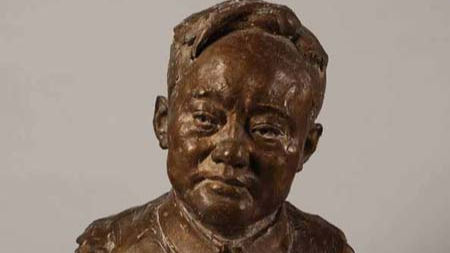
Ba Jin
Overview
Ba Jin (1904-2005), born as Li Yaotang, was a renowned Chinese writer and highly influential figure in 20th-century Chinese literature. Known for his works that depicted the lives of ordinary people and critiqued societal issues, Ba Jin's literature often focused on themes of familial and social conflict, philosophical exploration, and the human condition. His most famous work, the Torrents Trilogy, includes the novels Family, Spring, and Autumn, reflecting the turbulence of Chinese society during the early 20th century.
Early Life and Education
Ba Jin was born in Chengdu, Sichuan province, into a scholarly family. He was influenced by anarchist ideas during his youth, which would later inform his literary themes. Ba Jin studied in France, where he was exposed to Western literature and political ideas, fueling his desire to address social injustices through his writing.
Literary Career
Ba Jin's literary career began in the 1920s, and he gained prominence in the 1930s with the publication of the Torrents Trilogy. The trilogy is regarded as a seminal work in modern Chinese literature, portraying the struggles of individuals against the backdrop of societal change. In Family, Ba Jin explores the dynamics and conflicts within a traditional Chinese family, critiquing the oppressive nature of feudal family structures.
Throughout his career, Ba Jin authored numerous novels, essays, and autobiographical works. His writing style is noted for its clear and direct prose, which effectively conveys the emotional depth of his characters. Ba Jin's works often reflect his advocacy for personal freedom and social reform, themes that resonated with readers during a time of significant political and cultural upheaval in China.
Later Life and Legacy
Ba Jin continued to write and publish throughout the mid-20th century, although his literary production was interrupted during the "cultural revolution" (1966-76), a period of political and social turmoil in China. Despite these challenges, he remained a respected and influential figure in Chinese literature. In his later years, Ba Jin advocated for intellectual freedom and transparency, contributing to discussions about the role of writers in society.
Ba Jin's legacy extends beyond his literary contributions; he played a significant role in cultural and literary discourse in China. His works have been translated into numerous languages, allowing international audiences to appreciate his insights into Chinese society and human nature. Ba Jin's influence continues to be felt in contemporary Chinese literature, as his themes of individualism and social critique remain relevant.
Exhibitions and Honors
Ba Jin's contributions to literature have been recognized through various exhibitions and honors. The Ba Jin Memorial Hall in Shanghai serves as a testament to his enduring impact, showcasing his life, works, and personal artifacts. His literature has been featured in exhibitions alongside other prominent 20th-century Chinese cultural icons, highlighting his significance in Chinese cultural heritage. Article reference1. The past, with flying colors. chinadaily.com.cn. 20192. Playlist: Books. chinadaily.com.cn. 2018Photo Gallery(3 pictures)CategoriesLiteratureTagModern and Contemporary LiteratureLiterary MastersCatalogue1. Overview2. Early Life and Education3. Literary Career4. Later Life and Legacy5. Exhibitions and Honors- - - []








